
Leander Resident Lookup Evidence
A resident lookup works best as a chain of modest confirmations, not a single all-purpose search. An appraisal card can connect a tax account to a situs address and owner, but it cannot establish every person who lives there. A recorded deed can establish a transfer chronology. Court, voter, and vital sources answer different questions and carry different access limits. Start with the record that fits the fact you need to confirm.
| Record | What It Confirms | Where | Access |
|---|---|---|---|
| Parcel card and deed | Tax-account owner, situs, legal description, and recorded transfer trail | WCAD or TCAD, then the relevant County Clerk | Public card and record index, with redactions and county limits |
| Voter registration | Election registration status and precinct context | VoteTexas/TEAM and county Elections | Official lookup only; protected fields stay protected |
| Court case | Public party role, filing, and disposition context | Williamson or Travis court channels | Public index or clerk request; restricted cases remain unavailable |
| Vital verification | Birth, death, marriage, or divorce event lead | Texas DSHS and local custodians | Eligibility, ID, time limits, and fees apply |
| Historical sources | Address or household snapshot for a particular year | Library, archive, directory, newspaper, probate, or census source | Coverage varies by collection and date |
Check first whether the parcel is in Williamson or Travis County. A Leander postal label does not choose the appraisal district, court, clerk, or elections office. Use the tax-year date and the record role in each note. An owner, court party, permit applicant, and historical householder are not interchangeable labels.
Leander Court Name Checks
The Williamson public judicial search offers Case, Party, and Attorney searches for civil, family, and probate records, plus calendar routes. Its help instructions allow a wildcard, but a first- or last-name wildcard needs at least one character and a case wildcard needs at least four non-dash characters. Soundex and wildcard cannot be used together. Use a middle initial, former name, date range, or known cause number before treating two same-name results as different people.
The county did not state the earliest year in the online index, and an observed public search can redirect to a login loop. That is a portal limitation, not proof that a case is absent. When a public hit supplies a cause number but not the needed filing, the Williamson District Clerk request form accepts a party name, document type, file date, and electronic or certified choice. The published schedule effective February 1, 2026 lists a $5 civil or criminal search, $0.10 electronic pages, $1 paper pages, and a $5 certified-copy add-on. Confirm the charge for a specific request before ordering.
The official court-search screen shows the starting options for this route.
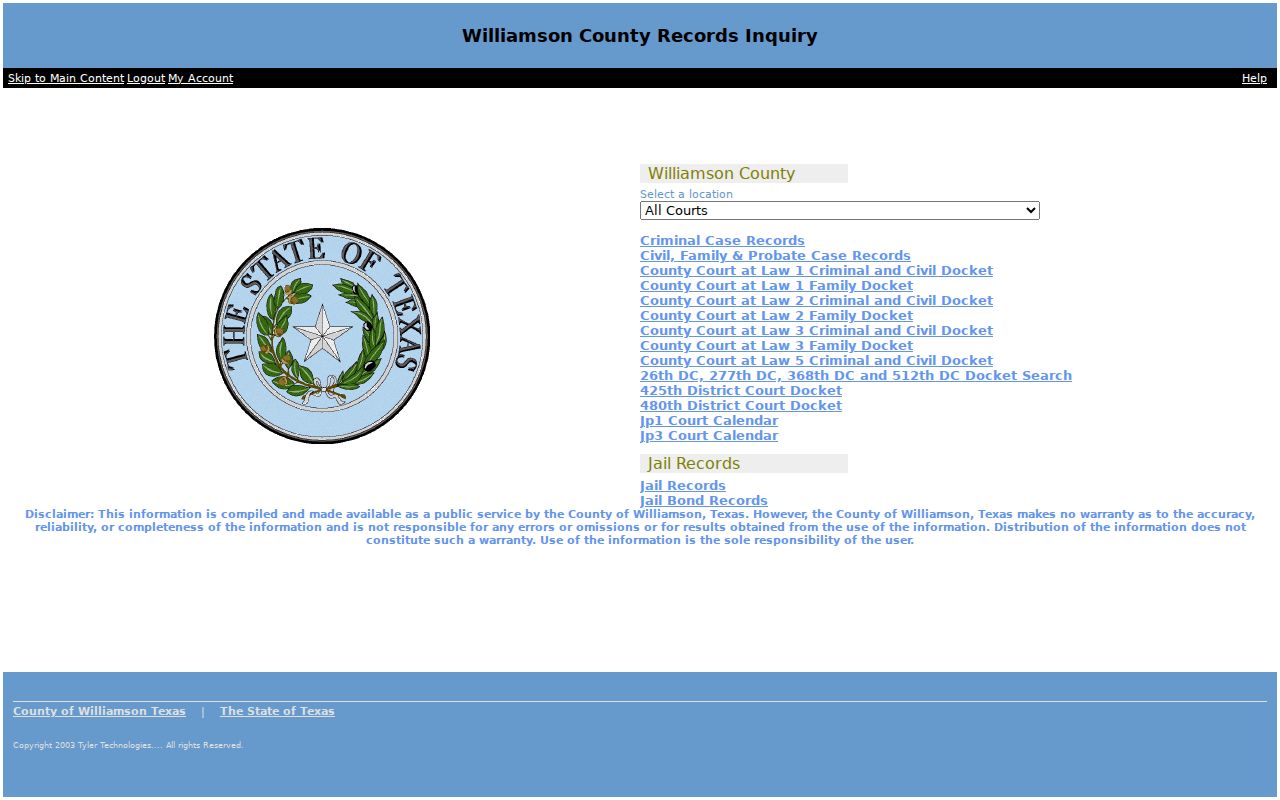
A case number opens the case context. Read the party role, disposition, and date before making any note, because a court appearance does not prove a current address, residence, or wrongdoing.
For search syntax and the limits of Soundex, use the court’s public search help.
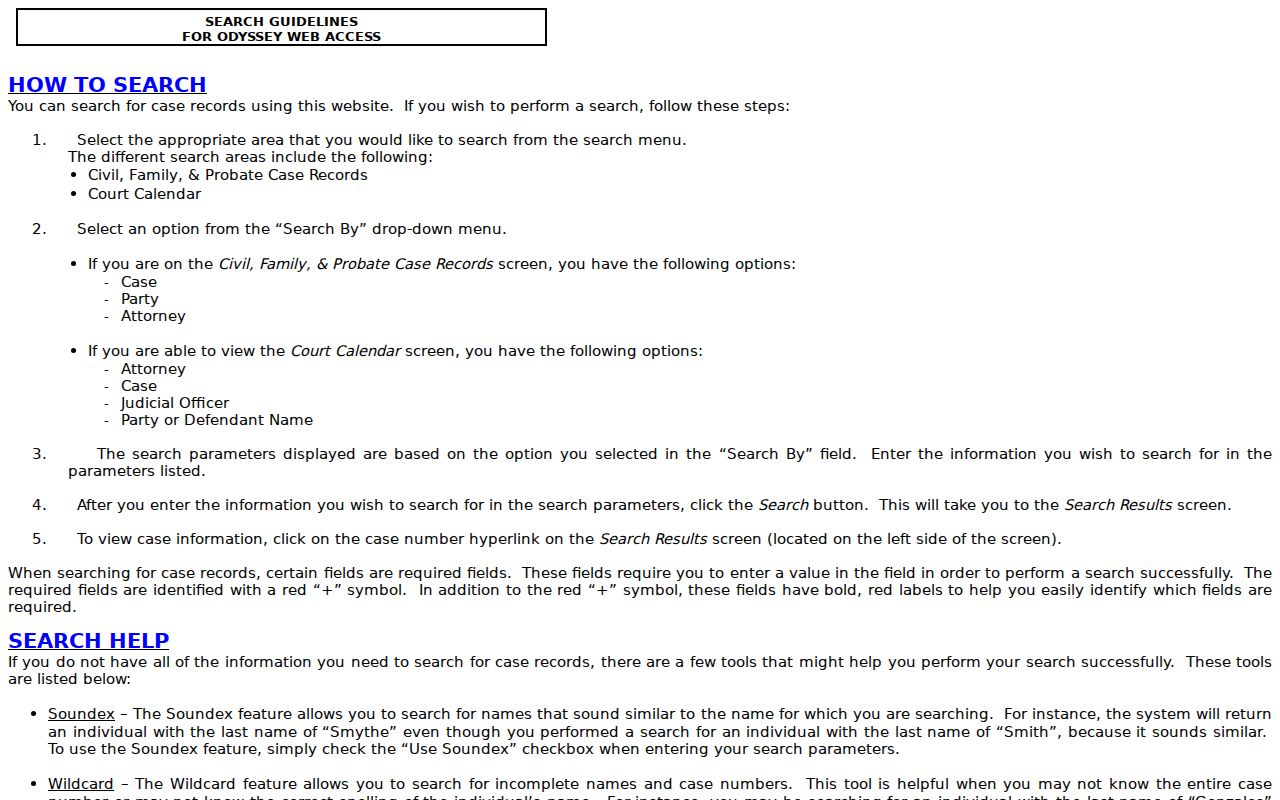
The help page makes the search rules visible before a query is run. It is useful for recording the exact query form when a common surname returns more than one case.
Verify a Leander Resident Record
Two independent anchors are the minimum for a defensible person-and-address association. Begin with a known address and use the appropriate appraisal district to identify the parcel and legal description. Then use a date-bounded deed, historical directory, probate filing, newspaper, or another independent source that matches the name and time period. Do not turn a name-only court result, a credential listing, or a business filing into an address claim.
- Normalize the name and address. Keep directional, suffix, unit, subdivision, ZIP, and the Williamson or Travis County location distinct.
- Find the parcel in WCAD or TCAD and save the official card URL, tax year, situs address, and legal description. The tax owner may not be the occupant.
- Search the relevant clerk by grantor or grantee name and date. Williamson says a land-record search cannot rely on legal description alone.
- Match a second source to the same person, address, role, and date. For a historical household, a dated directory plus a deed, obituary, census, or probate item is stronger than either item alone.
- Request only the needed document from the custodian when the online record stops. A narrow date, case, parcel, or document request is more useful than a request for a personal dossier.
- Docket
- A court’s running list of hearings, filings, and scheduled events. It is not necessarily a final decision.
- Index versus image
- An index points to a record through fields such as names, dates, or numbers. The image is the scanned document and can have separate viewing, redaction, or copy rules.
- Certified copy
- A copy the custodian certifies as official. It must be ordered from the office that holds the underlying record.
Note: A same-name result without two independent anchors remains unverified, even when a record is official.
Leander Voter Lookup Context
Texas TEAM is a registration-status tool, not a resident roster. Official training describes routes using name plus county, VUID and date of birth, or Texas driver-license or ID number with date of birth. A result can supply election-system status and precinct context. It does not reveal a ballot choice, and Texas has no permanent party-registration field. The sensitive identifiers used in the official form should never be copied into notes or published.
Choose Williamson or Travis County based on the tract. A wrong county can create a false non-match for a Leander address. Williamson’s opt-out form removes a person from the county website and the SOS lookup display, but the county states that it does not make the underlying public-information record confidential. The Texas Secretary of State also describes special protections for qualifying protected-address participants and other covered voters.
For a broader voter-file question, use the county’s voter-list request process and ask the custodian about lawful fields, redactions, format, fee, and date range. It is not a route for publishing a household list.
Leander Vital Record Boundaries
Texas DSHS distinguishes an event lead from an official copy. Its statewide order path covers Texas birth, death, marriage, and divorce products for applicants who meet the stated eligibility rules. Birth records have a 75-year protected period and death records a 25-year protected period, except for eligible requesters. A marriage or divorce verification is not the same thing as a county marriage license or a district-court divorce decree.
The Texas vital-record applications page identifies the form families and order requirements.
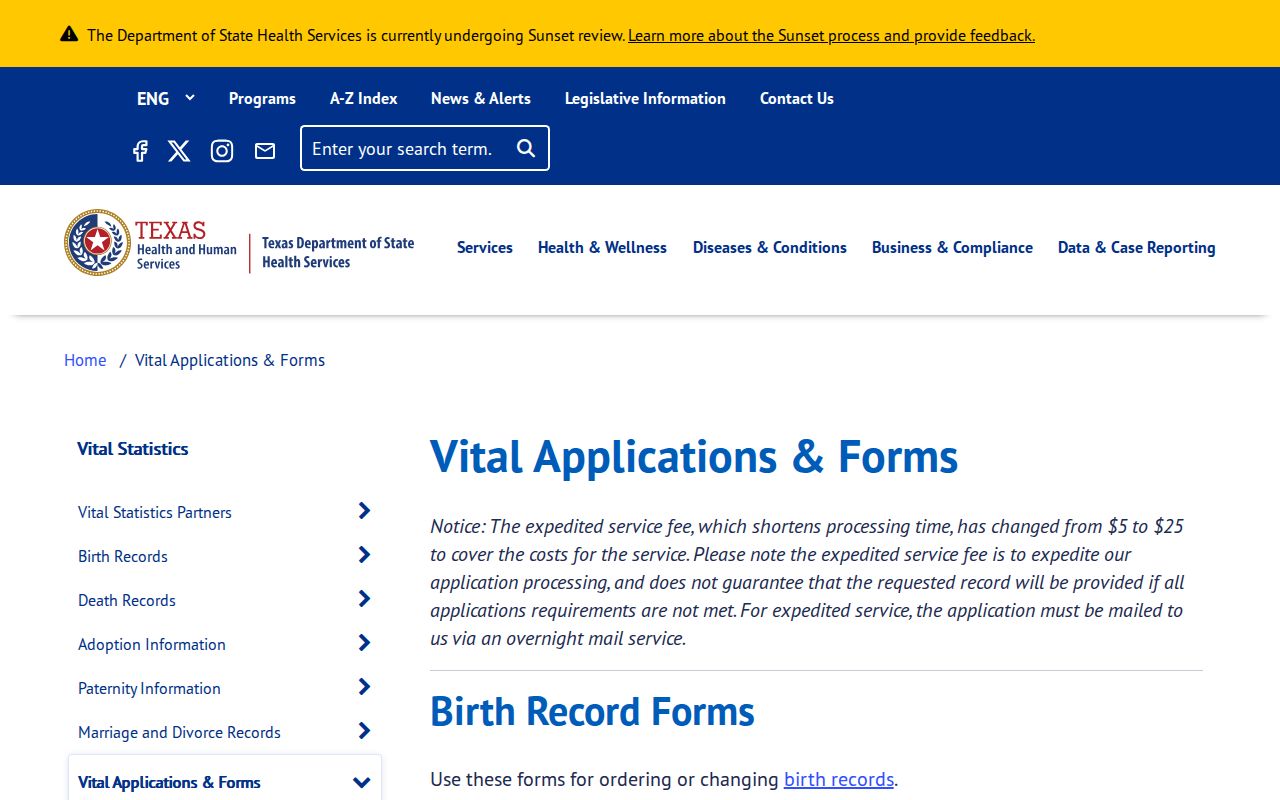
Use an index or verification as a lead, then ask the county clerk or district clerk for the record type it actually holds. Williamson’s local registrar handles qualifying birth and death copy requests in person, with photo ID, relationship or purpose information, and cash-only payment according to the county FAQ. It does not accept those requests by phone or email.
For an older event outside a county index, move to DSHS historical materials, church or cemetery records, newspapers, census schedules, probate, or the archive finding aid. A missing entry does not establish that an event never occurred.
Leander Roles Are Not Residence
A resident lookup may encounter a public professional credential, assumed-name filing, UCC filing, court role, or permit record. Each record describes a role in that system. A state business filing can connect a name to an entity or registered-office role. A license can confirm a credential or status. A Leander permit can name an applicant, contractor, agent, or owner. None of those entries establishes where the person lives.
The city’s Development Hub describes public categories for permits, plans, inspections, code cases, requests, and licenses, although the unauthenticated field list was not rendered in the research. Use the Leander public-records process for a narrow, address-linked municipal record when the online portal does not expose it. Ask for a final permit, inspection history, or code-case closure rather than a compiled profile.
Historical questions need dated evidence. For a household from an earlier era, pair a directory, deed, probate record, obituary, census item, or newspaper notice and state what each source actually says. The historical collections are treated in more depth in the Leander city directories.
Leander Custody Search Limits
Custody systems answer a different question from a resident lookup. The Federal Bureau of Prisons locator accepts a name or register number and covers federal inmates from 1982 forward. A federal result identifies a federal custody record, not a Leander address, a current household, or a complete criminal history. County and state systems have their own scope and retention limits.
The Federal Bureau of Prisons locator provides its official search path.
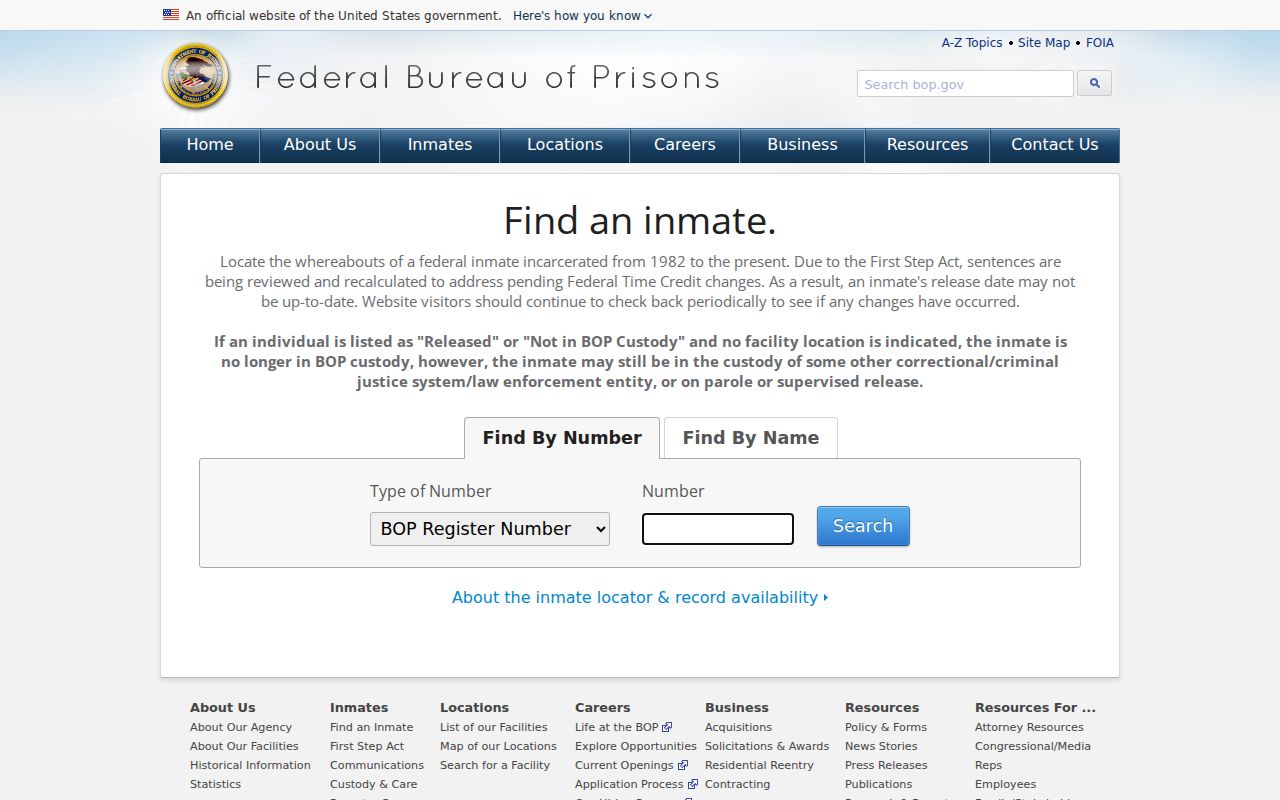
Use a custody result only for the custody question it answers. Read the reporting agency and date, and avoid folding that result into a claim about residence or personal identity.
Limits on a Leander Resident Lookup
Public availability does not require broad republication. Texas public-information principles still protect items such as Social Security numbers, driver-license information, personal phone numbers, signatures, financial account details, protected addresses, and unredacted vital or court images. Leander Library records of a person’s use are protected under Texas Government Code §552.124, and the library says lending history is not retained after return by default.
The Texas Address Confidentiality Program uses a substitute address and mail forwarding for qualifying participants. It does not erase every underlying record. The correct response to a protected or inaccurate display is to contact the relevant custodian or data holder and state the precise record and reason. The research did not identify a Leander-specific deletion portal, so do not promise one exists.
Lawful use. Use official Leander records for personal, lawful research, civic context, or historical work. Never use a record trail to stalk, harass, intimidate, or harm another person.