
Leander City Directory Collections
Leander does not have a verified, complete printed city-directory run in the research record. That makes the collection name and its access conditions especially important. The confirmed local lead is the UT Briscoe Center title Cedar Park, Leander, Northwest Austin, The Blue Phone Book, published by US South Publication. The browse record does not expose its edition years, so a reader should confirm an actual volume before assigning a year to a Leander household. Texas collections can still supply useful context, but an Austin-area directory is not proof that it covered every Leander address.
| Collection | Years | Where Held | Access |
|---|---|---|---|
| Cedar Park, Leander, Northwest Austin, The Blue Phone Book | Edition years not exposed | UT Briscoe Center browse/catalog record | Confirm a physical or catalog record before citing a year |
| Austin city and cross-reference directories | 1877; 1889-1958 examples | UT Briscoe Center | Austin-area context, not a complete Leander run |
| Texas city-directory collection | 18 decades represented | UNT Portal to Texas History | Keyword, county, and time-period searching |
| Texas printed and microform directories | Local years not itemized | TSLAC Reference Reading Room | Primarily on-site research in Austin |
| Williamson County Genealogical Society materials | Range not stated | Society research library | Books, periodicals, microfilm, and electronic resources |
A directory gives a year-specific view of a household, while county deeds, probate, marriage, and court materials follow different timelines. The Texas State Library and Archives Commission advises recording the title, publisher, year, page, city, address, and printed form of the name. That record of the search makes an entry reproducible later and makes a no-result easier to explain.
Note: A catalog listing confirms a title, but an edition and page are still needed for a household claim.
Leander Directory Research Desk
Leander Public Library research resources list TexShare databases, the Austin American-Statesman, Reference Solutions, America’s News, and Heritage Hub. Those services can help test a name against newspapers, genealogy tools, or local-business material. Some access may require a library card or on-site authentication. The library also supplies public computers, scanning, copying, and fax service, which makes it a practical place to preserve only the citation and page needed for a historical result.
The library research-services screen is a useful starting point for a Leander city directory search.

Library privacy rules protect records of a person’s use of library materials. The library says lending history is not retained after return by default, so research should focus on published sources and not on anyone’s borrowing activity.
The Williamson County Genealogical Society identifies its purpose as preservation and genealogical research. Its research library includes books, periodicals, microfilm, and electronic resources, alongside its Roundup and Chisholm Trail publications. The society is a useful fallback when an online directory search stops, particularly because Leander records can be filed in Williamson County while the city’s footprint also reaches Travis County.
The society’s research-library page shows one of the in-person channels behind Leander city directories.

Use society holdings as leads, then label the document type, date, and place in the research notes. A Williamson County record is not automatically evidence that a person lived within Leander.
Leander Directory Digital Shelves
The UT Briscoe directory browse page is the most specific catalog lead for a Leander city directory. It also lists Austin cross-reference directories, criss-cross directories, and Austin or northwest-suburban telephone titles. The confirmed Blue Phone Book title is valuable because it names Cedar Park, Leander, and Northwest Austin together. Its unexposed edition year is equally important: do not turn the title into a date range that the catalog does not show.
The UT Briscoe browse record identifies the local title to request or inspect.
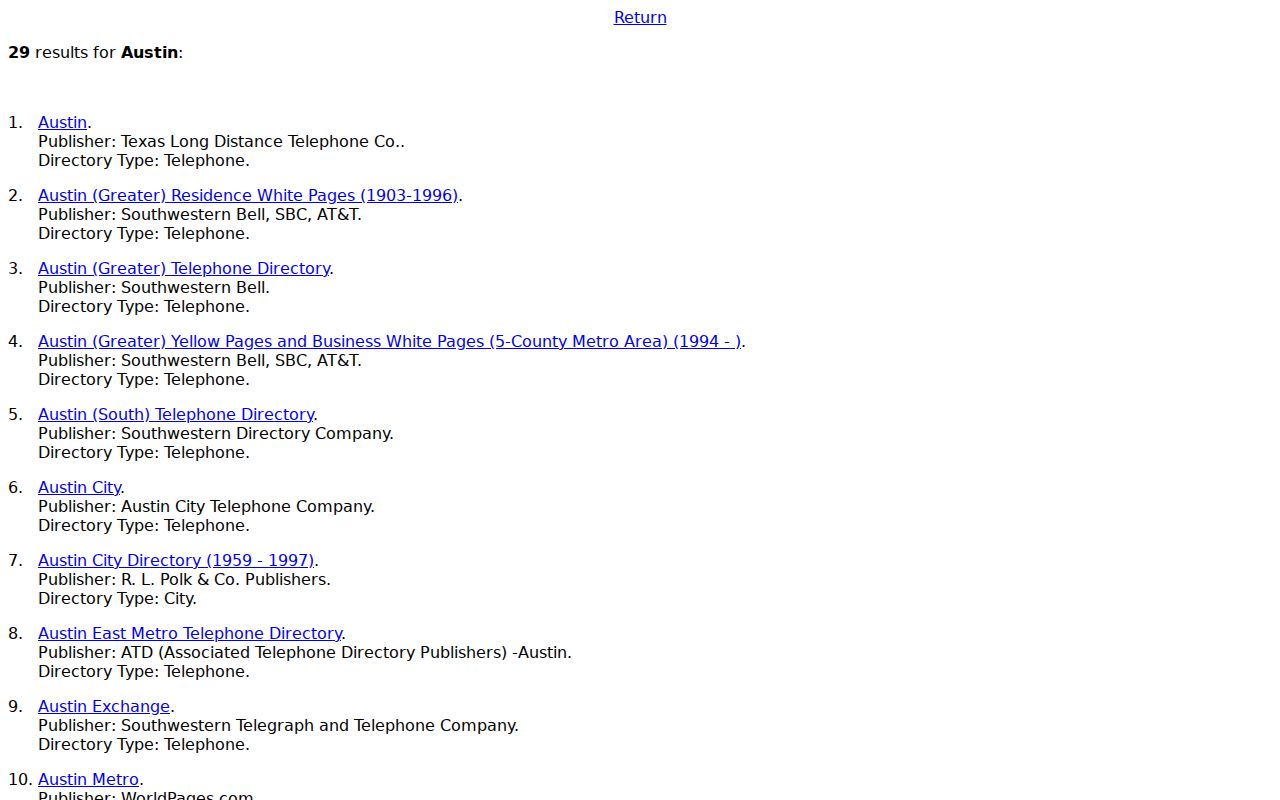
A copy of the title page and the page with the entry will preserve the publisher, edition, and scope together. That is stronger than a name copied into a separate note.
The TSLAC city-directory guide explains the normal search sequence: begin with an exact surname, test initials and spelling variants, check the street section, and compare the preceding and following years. Its Reference Reading Room holdings are primarily used on site. Staff do not search, transcribe, or scan an entire directory by phone or email, so a narrow title-and-page request is more realistic than a broad request for every listing.
The state guide documents the access limits that shape a Leander city directory visit.
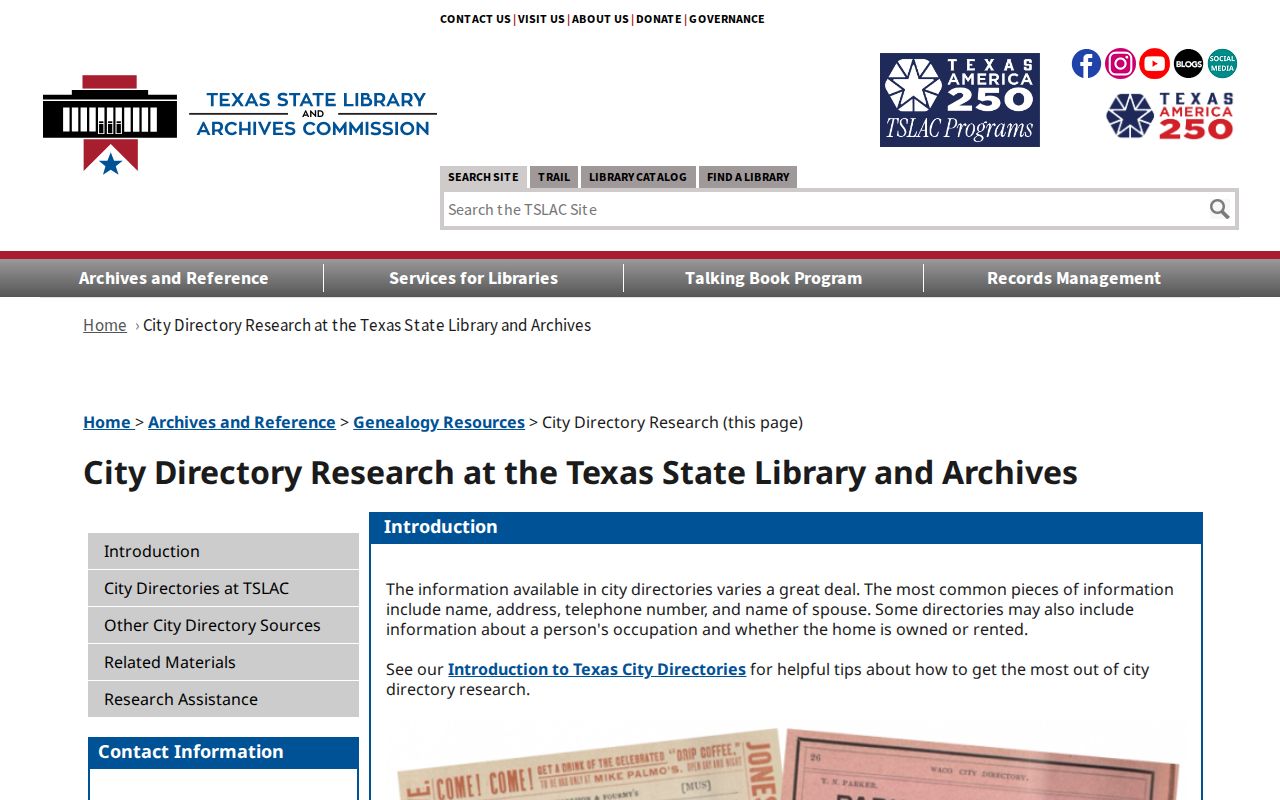
A reader who cannot visit can use the guide to identify a likely title and then ask whether a specific page can be copied under the holding institution’s rules.
The UNT Portal to Texas History city-directory collection provides keyword search plus county and time-period filters. Its inspected collection page showed 361 items across 18 decades, but no Williamson County or Leander-specific title was exposed. It remains a useful method and context source, especially when a household moved through the Austin area, but it is not a substitute for a confirmed local volume.
The UNT collection interface supports a careful search for related Texas city-directory material.
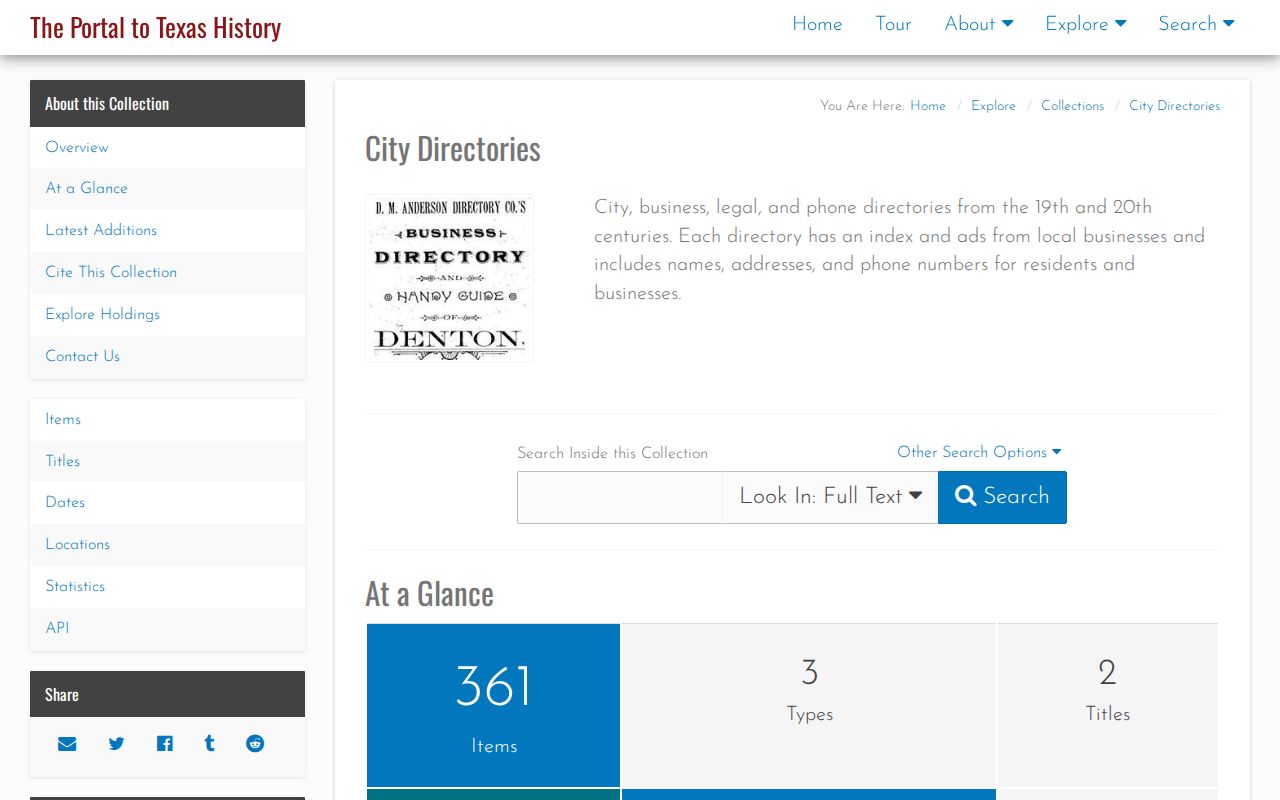
Save the scanned title page and the page image when the collection permits it. A search hit without the edition context cannot establish what place or period the directory actually covered.
Note: A missing entry can reflect a survey choice, a recent move, a rural omission, or nonpublication.
Leander Directory Timeline
Directory research follows local names as well as dates. Williamson County recordkeeping began in 1848. Bagdad was officially named in 1855, the railroad reached the area in 1881, and Leander was established in 1882 after the railroad bypassed Bagdad. The city created its Historical Preservation Commission in 2017. These milestones do not prove an entry in a directory, but they explain why a search may need a county record, a Bagdad term, or a later municipal history source.
| 1848 | Williamson County recordkeeping begins with county organization. |
|---|---|
| 1855 | Bagdad is officially named. |
| 1881-1882 | The railroad arrives, then Leander is established after the Bagdad bypass. |
| 2017 | Leander creates its Historical Preservation Commission. |
A citation should retain the source’s place name instead of silently converting Bagdad into Leander or assuming a modern boundary.
Reading Leander Directory Entries
A verified Leander page has not been rendered in the research material, so the safe approach is to treat the standard directory fields as an inventory, not as a claim about any one person. TSLAC identifies common fields as name, address, telephone, spouse, occupation, and an owner-or-renter indication. A future scan should also preserve its abbreviation key, section type, publisher, edition year, and page. The actual printed name matters because initials, alternate spellings, and widow notation can change the search path.
| Printed name | Copy the form exactly, including initials, suffixes, or relationship notation. |
|---|---|
| Address | Record the number and street, then compare it with the street or householder section. |
| Telephone | Use only as a period clue when printed; do not republish a modern private contact number. |
| Spouse or household clue | Preserve parentheses or widow notation as printed, with the edition year and page. |
| Occupation or owner/renter mark | Capture it only when the volume prints it, and read the abbreviation key before interpreting it. |
- Criss-cross directory
- A reverse section arranged by street and number, used to compare an address with the alphabetical listing in the same edition.
- Householder index
- A name or address arrangement that identifies the household entry rather than every person who may have been present.
- Abbreviation key
- The volume’s own explanation of shorthand. Photograph or cite it before assigning meaning to a mark.
One entry is a dated snapshot. It should not be used alone to prove a move date, an entire household, or continuous residence. Compare it with a parcel card, deed, newspaper, census, probate, or city-permit record that fits the same period.
Bagdad Names in Leander Directories
Historical searches need a place-name test. The City of Leander history says Bagdad was officially named in 1855, then the railroad reached the area in 1881 and bypassed Bagdad by about one mile. Leander was established in 1882, and the city timeline records lot sales on June 18 of that year. A historical directory, deed, newspaper, or depot reference may therefore use Bagdad, Leander, railroad, or depot language for related activity.
The official city history gives the local context behind a Leander city directory name search.
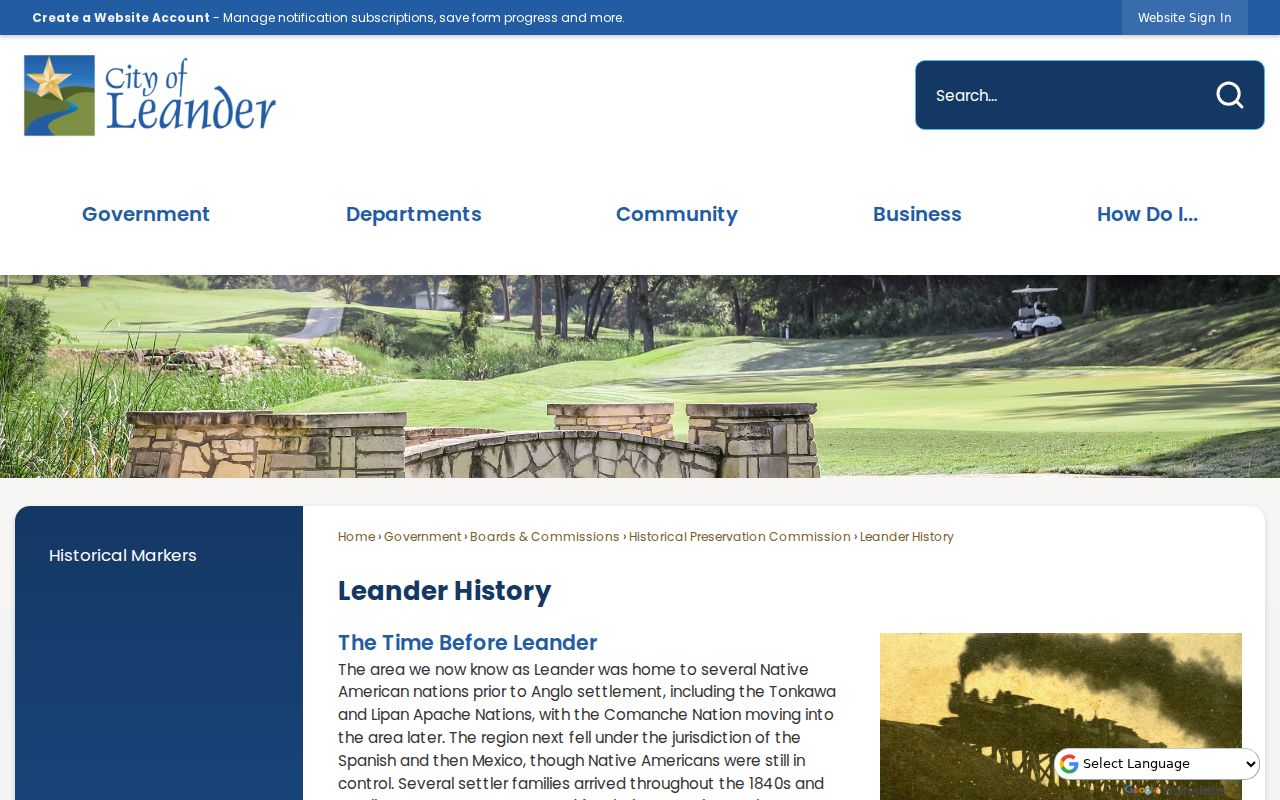
The railroad era also brought records that refer to merchants, parcels, transport, granite, limestone, or Old Town rather than a modern street label. Test those terms as historical vocabulary, then identify the source role carefully. A railroad-era mention is not, by itself, continuous-residence evidence.
- Search the exact surname under both Bagdad and Leander context where the catalog or index permits.
- Test initials, spelling variants, depot, railroad, and old-place references in the same period.
- Record the source that first uses Leander and retain the title, date, and page for each result.
That method respects the transition rather than forcing an 1880s source to use a modern municipal name.
Leander Directory Preservation Record
When a historical directory stops or an older index is not online, the county’s preservation work offers a practical next channel. The Williamson County archive plan reports that deed books 1-168 were preserved from 2001 through 2006, that scanning began for deed books in February 2005, and that 943 deed books had been scanned. The plan also describes preservation of marriage indexes, reverse deed indexes, plats, microfilm, and older probate material.
Those milestones do not establish a local city-directory run. They do show why a household search can move from a directory shelf to a deed book, an older index, microfilm, a county research library, TSLAC, or the genealogy society when a digital result ends. Preserve the volume and page at every handoff.
Note: Archive preservation milestones describe the county’s work, not an assurance that any particular image is online.
Tracing Leander Directory Households
Use directories as a series of dated household snapshots. Start with a verified printed form of the name, then make one row for each edition searched. Keep the address, spouse or relationship notation, telephone line when printed, occupation wording, page, and title. Next, compare the same address in the street section and note any variant street form. A change belongs in the notes only when the source actually prints it.
- Find the earliest confirmed entry and save the title, publisher, edition year, page, and section.
- Check the prior and following editions with surname, initials, and spelling variants.
- Compare the address against the criss-cross or householder section when the volume has one.
- Pair the dated directory row with the released federal census for household context, not an assumed exact street match.
- Test a change with a deed, probate, newspaper, permit, or obituary source before treating it as a move or death.
The historical shelf stays distinct from the address trail. For an address-first search that moves backward through deeds and household evidence, use the Leander Past Residents page after preserving the directory citation.
Leander Directory Gaps
Absence has several explanations. Directories may omit children, lodgers, people without phones, rural households, recent arrivals, and those who requested nonpublication. The research did not locate a verified Leander-specific year run, an official searchable Leander obituary index, or a rendered digitized Leander sample page. Each missing element should remain a documented gap instead of being filled with an assumed date or entry.
For a useful citation, keep the source type, repository, title, publisher, edition year, page, exact printed name, address, and search terms. That record lets the next researcher distinguish a true no-result from a title that never covered the address.